Industry
Machine data, mold tracking and production monitoring for injection molders
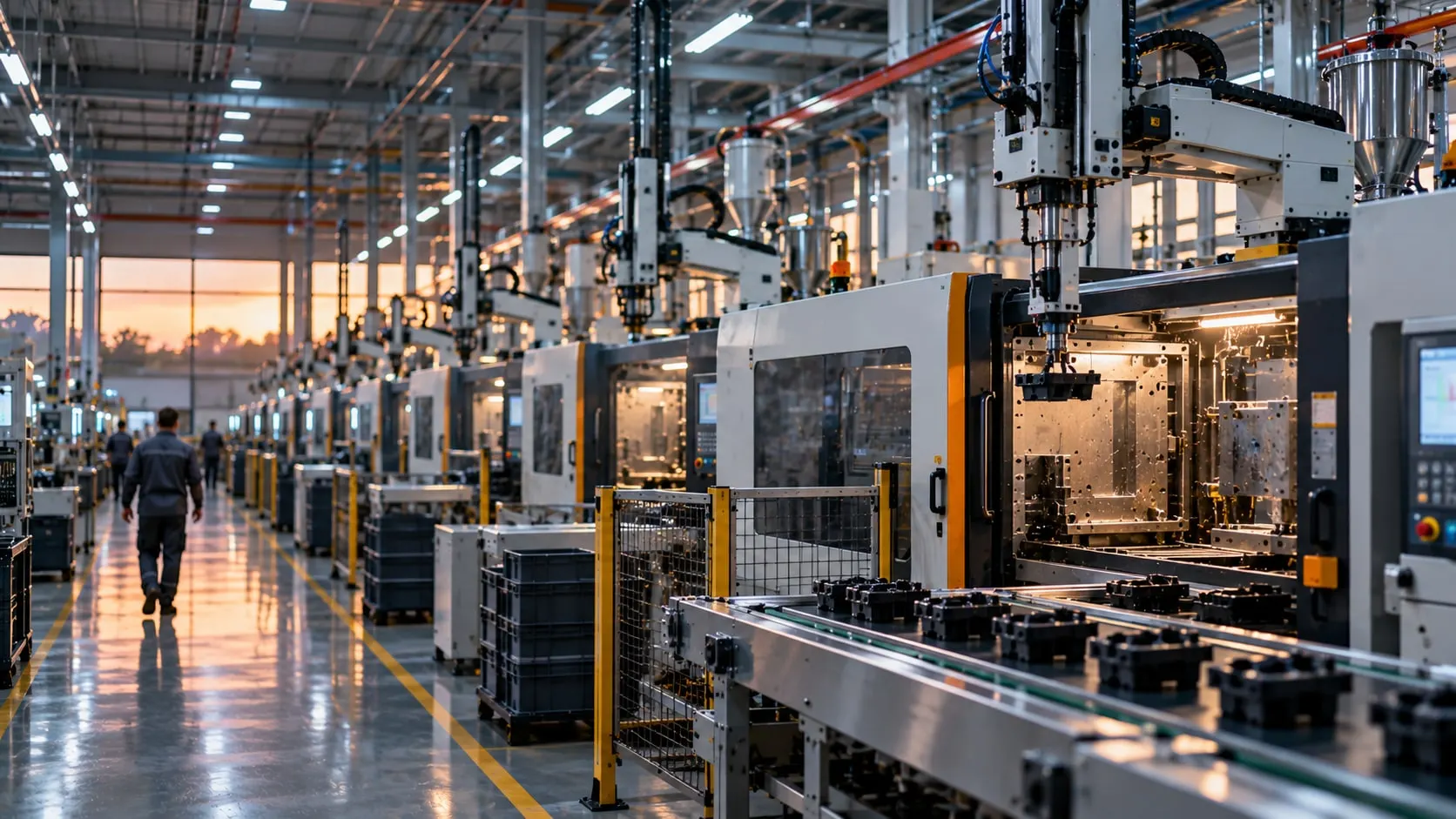
We collect cycle time, shot counts, process parameters and stoppages from injection machines of different brands and ages and make them meaningful per mold and per work order.
Our clients
- Siemens

- Anadolu Isuzu

- BSH
- Tofaş

- Toyotetsu

- Martur

- Turkcell

- Vodafone

- Doğadan

- Pakmaya

- Bross

- Abdi İbrahim

- Nobel İlaç

- Plastimak

- Dalgıç Kalıp

- Barbaros Motor

- Magneti Marelli

- Rözmaş

- Sanel

In an injection molding shop, output is usually decided by small drifts in cycle time, mold changes that run long and scrap that never gets booked at the end of the shift. The machine park is rarely uniform: newer machines speak Euromap 77 or OPC UA, older ones offer only the controller's own interface or a few digital signals.
VOLSOFT connects that mixed park to one data model. We use Euromap 77 / OPC UA on newer machines and the Euromap 63 file interface, the controller PLC or a cycle signal on older ones, without touching control logic. The data is matched with the work order, the mold and the product.
Standard and actual cycle time, cavity count, changeover duration, downtime reasons and scrap then sit on one screen, mold shot counters feed the maintenance plan and good counts are posted to the ERP. Every project runs on Proxus.
What we deliver
Plastics and injection molding
-
Cycle time and shot count
The cycle time of every shot is recorded and compared with the mold's standard. Real part counts are calculated from the cavity count.
-
Mold changes and mold tracking
Start, end and first approved part of each mold change are recorded. Shot counters are kept per mold and linked to its maintenance interval.
-
Process parameters
Injection pressure, hold time, barrel zone temperatures, mold temperature and dosing values are stored per shot, and out-of-tolerance shots are flagged.
-
Downtime, scrap and rejects
Stoppages open automatically from the machine signal and the operator picks the reason on the panel. Scrap is booked against the work order and appears in the shift report.
-
Auxiliary equipment data
Values from dryers, temperature control units, chillers and material loaders are added to the same machine record.
-
Production confirmations to the ERP
Work orders come from the ERP; good count, scrap and material consumption are posted back automatically.
Processes we work on
Where the data starts in plastics and injection molding
- Injection molding machines
- Mold changeovers (SMED)
- Mold maintenance and shot counters
- Resin drying and conveying
- Temperature control units and chillers
- Blow molding machines
- Extrusion lines
- Robotic part removal and packing
- Resin and masterbatch dosing
How a project runs
From discovery to live, step by step
- 01
Machine park inventory
We list each machine's brand, controller, Euromap 77 / OPC UA support and network status, and decide how data will be read from each one.
- 02
Mold and product master data
Molds, cavity counts, standard cycle times and product mappings are loaded into the data model from the ERP or existing lists.
- 03
Pilot and commissioning
Data collection, downtime tracking and the operator panel go live on a few machines first. Measured cycle times are checked against what happens on the floor.
- 04
Full park and ERP integration
The remaining machines are added and work orders and confirmations are connected to the ERP. Planning, toolroom and quality teams are trained.
Built on Proxus
Proxus collects data from injection machines through OPC UA and PLC drivers, processes cycle and downtime events at the edge and calculates OEE with mold and work-order context.
Proxus is the industrial data platform built by the VOLSOFT team.
Frequently asked questions
Common questions
How do you collect data from an injection molding machine?
On newer machines we use the Euromap 77 interface (based on OPC UA) or the machine's OPC UA server. On older machines we use the Euromap 63 file interface, the controller PLC or at least the cycle and alarm signals. The method is chosen per machine during the inventory.
What does a mold tracking system do?
A mold tracking system records which machine each mold runs on, its shot count, changeover times and maintenance status. Maintenance intervals are tied to shot counts and each mold's history is in one place.
Can injection machines from different brands share one system?
Yes. Each machine is connected through its own interface, and the data is mapped to a shared model. Cycle time, downtime and OEE then mean the same thing across brands.
How does cycle time tracking help reduce scrap?
When cycle time and process parameters are recorded per shot, you can see in which mold, shift and parameter a drift began. Quality teams analyze scrap from records rather than estimates.
How long does it take to set up production monitoring for injection molding?
It depends on the number of machines, their interfaces and the scope of the ERP integration. Projects usually start with a pilot on a few machines, and the scope is set during the discovery call.
Related pages
Often looked at together
- Solution Mold Monitoring Automatic shot counts, mold-to-machine tracking and shot-based mold maintenance. Explore →
- Solution OEE Software OEE software fed by PLC and CNC data, with downtime reasons, work orders and ERP sync. Explore →
- Technology OPC UA integration Connecting to OPC UA servers with security modes and certificates, node selection and data modeling. Explore →
- Service MES and OEE Implementation Production tracking with automatic OEE, downtime, work orders and shift reports from machine data. Explore →
- Solution Downtime Tracking Automatic stop detection, reason codes, Pareto analysis and MTBF/MTTR reporting. Explore →

Next step
Let’s turn your goal into a clear engineering scope.
Tell us about your plant, your machines and your goal. An integration engineer will set up a discovery call with you.