Solution
Machine Downtime Tracking and Root Cause Analysis
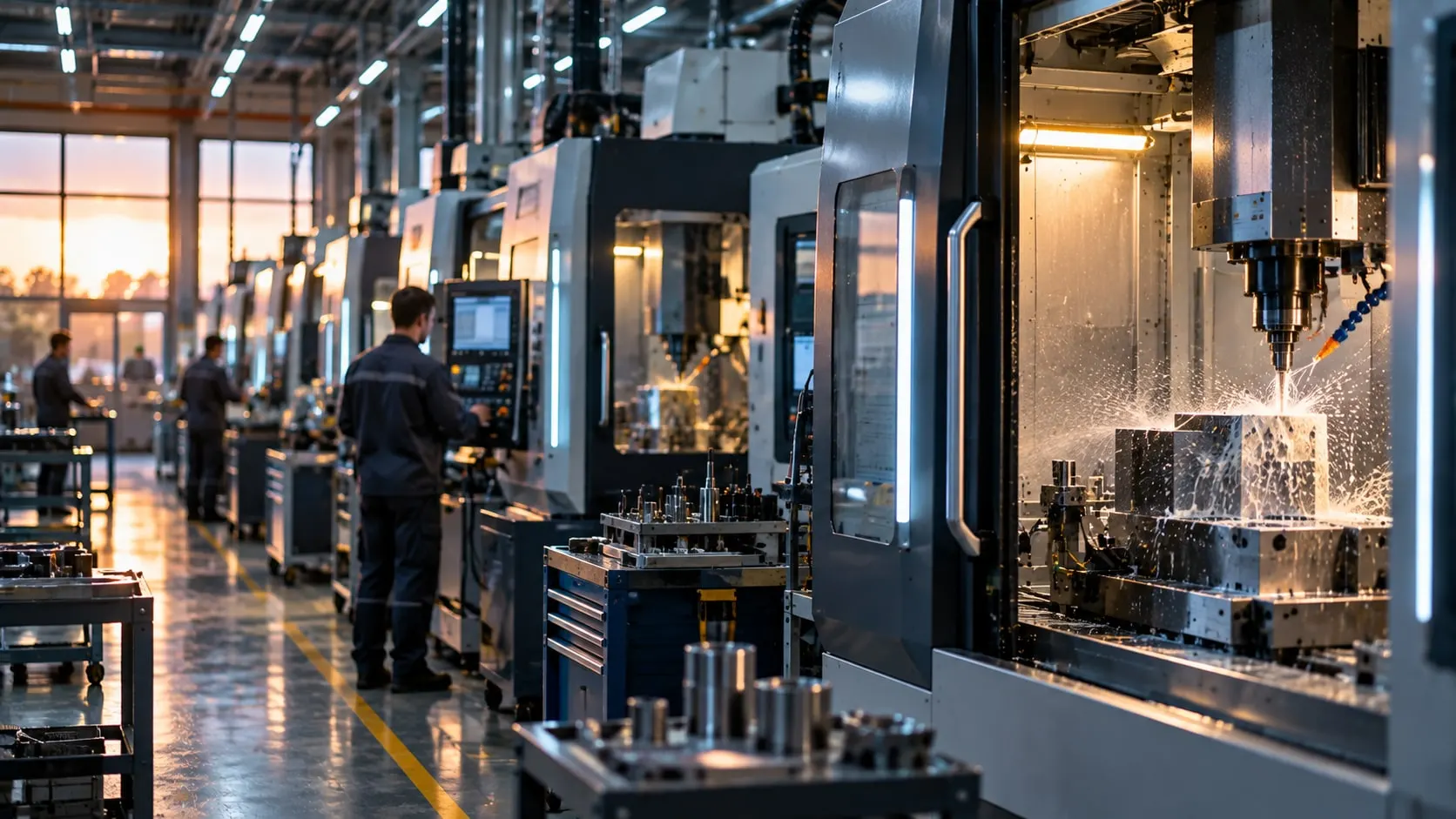
We build downtime tracking that catches every stop from machine signals, records the reason at the machine and ranks losses so teams fix the right things first.
Our clients
- Siemens

- Anadolu Isuzu

- BSH
- Tofaş

- Toyotetsu

- Martur

- Turkcell

- Vodafone

- Doğadan

- Pakmaya

- Bross

- Abdi İbrahim

- Nobel İlaç

- Plastimak

- Dalgıç Kalıp

- Barbaros Motor

- Magneti Marelli

- Rözmaş

- Sanel

Machine downtime tracking records when a machine stopped, for how long and why. Paper downtime logs capture the long breakdowns but lose the short setup stops, material waits and micro-stops, which often add up to a large share of total loss.
VOLSOFT detects the start and end of each stop from PLC or CNC signals and asks the operator for the reason on a terminal at the machine. We design the reason-code tree with your team so it stays simple enough to be used on every shift. Stops are split into planned and unplanned and feed directly into the availability component of OEE.
At Bross, a machine data collection and reporting system was used to analyze production gaps and delays, and the client reported a 15% increase in efficiency in its Clutch review. Downtime tracking, like all our work, runs on Proxus.
What we deliver
Downtime Tracking
-
Automatic stop detection
Stop start and end come from machine signals; stops below a defined duration count as micro-stops, longer ones require a reason.
-
Reason-code tree
Categories such as mechanical failure, electrical failure, adjustment, tool or mold change, waiting for material, no operator and planned maintenance, with sub-reasons fitted to your floor.
-
Planned vs unplanned
Breaks, planned maintenance and no-order time are kept separate so availability and OEE are calculated correctly.
-
Pareto and trends
Downtime is ranked by machine, line, shift and reason, and the effect of each improvement shows up in the trend.
-
MTBF, MTTR and maintenance calls
MTBF and MTTR are calculated from failure stops, and when operators call maintenance from the terminal, response time is measured too.
How a project runs
From discovery to live, step by step
- 01
Downtime definitions
With production and maintenance we agree which signal defines a stop, the micro-stop threshold and planned downtime categories.
- 02
Reason codes
Existing downtime logs are reviewed and a lean reason-code tree that operators will actually use is designed.
- 03
Connectivity and terminals
Machines are connected, operator terminals go live and reason entries are validated on the floor over several shifts.
- 04
Reports and improvement loop
Pareto, MTBF/MTTR and shift reports are delivered, ready for regular loss review meetings.
Built on Proxus
Stop detection runs as Proxus rules on machine signals; downtime events are stored in the historian with their reasons and feed directly into OEE.
Proxus is the industrial data platform built by the VOLSOFT team.
Frequently asked questions
Common questions
How do you track machine downtime automatically?
Downtime is tracked by taking stop start and end times from PLC or CNC signals and having the operator select the reason on a terminal at the machine. Duration comes from the machine, the reason from the person, which removes estimated times from paper logs.
How should downtime reason codes be structured?
Split stops into planned and unplanned first, then into main categories such as breakdown, adjustment, material, tool or mold change, operator and quality, each with a few sub-reasons. Keep the list short; long lists lead to wrong picks on the floor.
What are micro-stops?
Micro-stops are stops too short to notice individually but frequent enough to matter, such as jams, sensor trips or small adjustments. They rarely appear in manual logs and surface once data is collected automatically. In OEE they are usually treated as a performance loss.
What are MTBF and MTTR?
MTBF, mean time between failures, is total run time divided by the number of failures. MTTR, mean time to repair, is total repair time divided by the number of failures. Both are only reliable when failures are captured automatically with their reasons.
How does downtime tracking relate to OEE?
Unplanned downtime reduces availability, and micro-stops reduce performance, two of the three OEE components. Downtime tracking with reason codes explains why OEE moves, which the OEE number alone cannot do.
Related pages
Often looked at together
- Service MES and OEE Implementation Production tracking with automatic OEE, downtime, work orders and shift reports from machine data. Explore →
- Service Machine Data Collection Read-only production data collection from PLCs, CNCs and robots, with control logic left untouched. Explore →
- Industry Textile Machine data, yarn-break stoppages and efficiency analysis in knitting, weaving and dyeing. Explore →
- Industry Automotive Data collection on press, welding and assembly lines, IATF 16949 traceability and OEE. Explore →
- Technology Fanuc CNC data collection Reading state, program, part count and alarms from Fanuc Series 0i machines over the network. Explore →

Next step
Let’s turn your goal into a clear engineering scope.
Tell us about your plant, your machines and your goal. An integration engineer will set up a discovery call with you.