Service
Edge computing for the factory floor
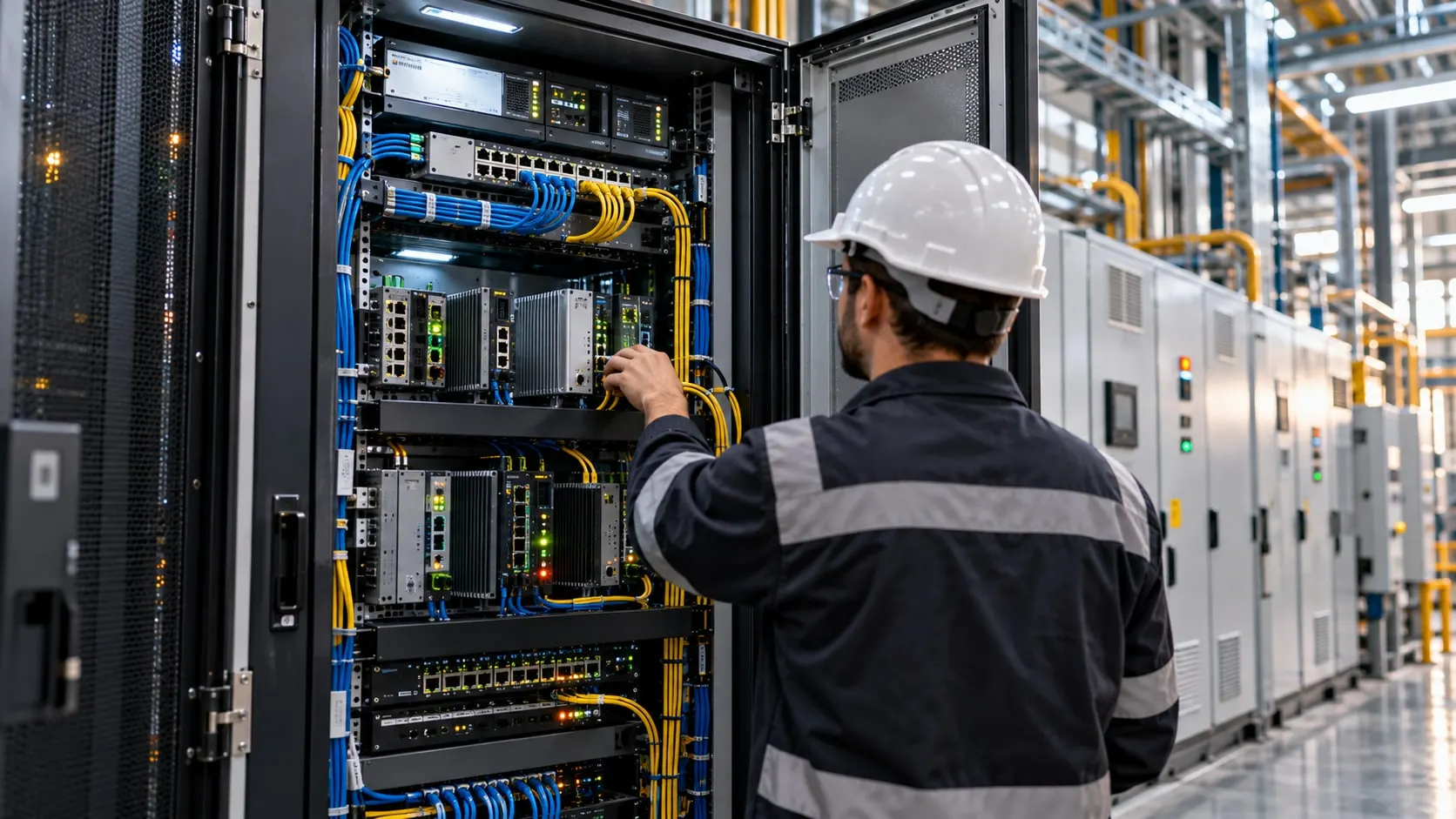
We collect, clean and buffer data at the point closest to the machine. If the network or the central server goes down, production data is not lost and local rules keep running.
Our clients
- Siemens

- Anadolu Isuzu

- BSH
- Tofaş

- Toyotetsu

- Martur

- Turkcell

- Vodafone

- Doğadan

- Pakmaya

- Bross

- Abdi İbrahim

- Nobel İlaç

- Plastimak

- Dalgıç Kalıp

- Barbaros Motor

- Magneti Marelli

- Rözmaş

- Sanel

Edge computing means processing data on the plant floor, close to the machines, before it goes to a central server or the cloud. In a factory there are three concrete reasons: PLCs should not be exposed to the corporate network or the internet, networks do go down, and moving every millisecond sample to the center is neither necessary nor cheap.
In a typical architecture an edge node sits in each production hall or line group. It talks to machines on the OT network, names the data, filters redundant samples with deadband and sampling rules, and computes aggregates such as averages and totals where useful. Only one outbound, controlled connection is opened to the center.
The failure we see most often is an edge box installed and forgotten: no backup, no updates, and when the disk fills, data disappears without anyone noticing. VOLSOFT deploys edge nodes with Proxus and makes them manageable centrally. We do not sell hardware; we use the customer’s preferred or a standard industrial PC or virtual machine.
What we deliver
Edge Computing
-
Store-and-forward buffering
When the link to the center drops, data is stored on the edge node with time stamps and forwarded in order when it returns. Buffer capacity and fill level are monitored, so loss never happens silently.
-
Local preprocessing
Deadband filtering, report-by-exception, unit conversion and aggregation happen on site. The center receives meaningful, clean data and network and storage load drop.
-
Local rules and alarms
Rules such as threshold breaches, machine stops or sensor failures run at the edge without depending on the central server. Notifications are also forwarded to the center once connected.
-
OT/IT separation
The edge node is the controlled crossing point between OT and IT networks. Connections are outbound only; nothing outside can reach the PLCs.
-
Central management
Configuration, driver versions and node health are monitored and managed centrally. If a node fails, its configuration is restored from backup onto new hardware.
How a project runs
From discovery to live, step by step
- 01
Network and topology review
OT network layout, VLANs, firewall rules and machine locations are reviewed with IT. The number and placement of edge nodes follow from that.
- 02
Hardware and installation
Proxus Edge is installed on the customer’s preferred industrial PC or virtual machine. Backup, time synchronization and remote management are set up from day one.
- 03
Rules and buffer testing
Preprocessing and alarm rules are configured. A network outage is simulated on purpose to confirm buffered data arrives complete and in order.
- 04
Monitoring and handover
Node health, buffer fill and connection status are monitored. The architecture document and recovery procedure are handed to the IT/OT team.
Built on Proxus
Proxus Edge runs drivers, preprocessing, rules and buffering on site, storing data when the central link drops and forwarding it on reconnect. Edge nodes are managed from the central Proxus server.
Proxus is the industrial data platform built by the VOLSOFT team.
Frequently asked questions
Common questions
What is edge computing in manufacturing?
Edge computing in manufacturing means processing machine data on site, close to the source, before it reaches a central server or the cloud. The edge node sits on the OT network, collects, cleans and buffers data, and runs local rules. It reduces latency, network load and exposure of control systems.
Edge or cloud: which one do I need?
Usually both, for different jobs. Real-time rules, buffering and OT security belong at the edge; long-term analytics and multi-site reporting belong in the data center or cloud. They complement each other rather than compete.
What happens to data when the network goes down?
With store-and-forward buffering, nothing is lost. The edge node keeps time-stamped data locally and forwards it in order once the connection returns. Buffer capacity is sized for the longest outage you expect.
Do I need special edge hardware?
No. A standard industrial PC or a virtual machine on existing infrastructure is enough. VOLSOFT does not sell hardware; the choice depends on environmental conditions and the number of machines per node.
Related pages
Often looked at together
- Solution Industrial IoT Platform Proxus: PLC connectivity, edge, UNS, historian and ERP integration in one on-premises platform. Explore →
- Solution Unified Namespace (UNS) One namespace for plant data: ISA-95 topic structure, naming rules, MQTT and governance. Explore →
- Solution Industrial IoT Solutions LoRaWAN and wireless field data: network design, integration and one model with PLC data. Explore →
- Technology MQTT integration Publishing plant data through an MQTT broker as JSON or Sparkplug B, with an orderly topic tree. Explore →
- Technology OPC UA integration Connecting to OPC UA servers with security modes and certificates, node selection and data modeling. Explore →

Next step
Let’s turn your goal into a clear engineering scope.
Tell us about your plant, your machines and your goal. An integration engineer will set up a discovery call with you.