Solution
Industrial IoT Platform: Plant Data on Proxus
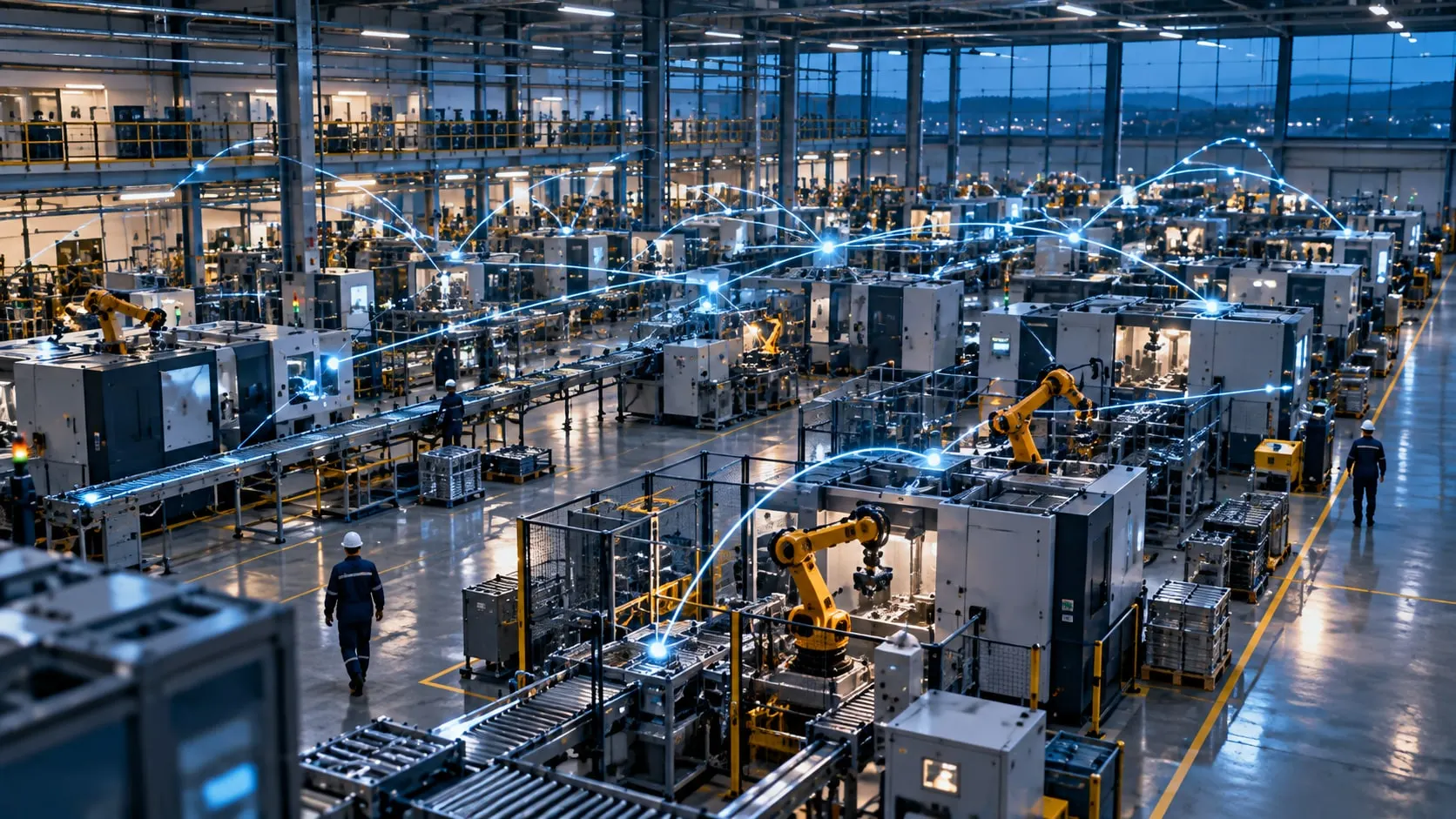
Every project we deliver runs on one industrial IoT platform: Proxus, developed by our own team. It gives your plant a single data path from machine to ERP that you own and run.
Our clients
- Siemens

- Anadolu Isuzu

- BSH
- Tofaş

- Toyotetsu

- Martur
- Turkcell

- Vodafone

- Doğadan

- Pakmaya

- Bross

- Abdi İbrahim

- Nobel İlaç

- Plastimak

- Dalgıç Kalıp

- Barbaros Motor

- Magneti Marelli

- Rözmaş

- Sanel

An industrial IoT platform is the software layer that connects to machines and sensors, processes and stores their data, and delivers it to the systems that need it. In most plants the problem is not a lack of data but fragmentation: one tool per machine builder, one database per project, one spreadsheet per report, and every new use case starts with another round of PLC integration.
We solve that with one platform. Proxus, developed by the VOLSOFT team, combines drivers, edge processing, a Unified Namespace, a historian, rules and alarms, dashboards and delivery to ERP, databases and cloud. As a systems integrator we install it, model your plant on it and build the applications your teams use, from OEE to maintenance and energy.
Proxus runs on your own infrastructure, with no cloud dependency, and buffers data at the edge when the network is down. The product itself, pricing and documentation live at proxus.io; this page explains how we deploy it in a factory.
What we deliver
Industrial IoT Platform
-
Native machine connectivity
Built-in drivers for Siemens S7, Allen-Bradley, Mitsubishi MELSEC, Omron, Beckhoff, Fanuc, Heidenhain, KUKA and Yaskawa, plus OPC UA, Modbus and MTConnect. No separate OPC server or protocol gateway software in between.
-
Edge processing and buffering
Data is filtered, scaled, aggregated and turned into machine states close to the source. When the network drops, the edge node buffers and forwards everything in order once it is back.
-
Unified Namespace
All data is published into one namespace structured along the ISA-95 hierarchy, so MES, ERP, BI and AI applications find the same value under the same name.
-
Historian
Time-series values and events are stored and can be queried in the context of a shift, batch or work order, without a separate historian product.
-
Rules, alarms and dashboards
Rules on thresholds, durations and state changes raise alarms and send notifications. Web dashboards for operators, maintenance and management are built on the same platform.
-
Delivery to ERP, databases and cloud
Data flows to SQL Server, PostgreSQL, Kafka, MQTT, Azure or AWS, and work orders and confirmations move both ways with the ERP.
How a project runs
From discovery to live, step by step
- 01
Architecture review
We review existing PLCs, SCADA, historians, network segments and IT security policies, and agree where edge nodes and the central server will run.
- 02
Installation
Proxus is installed on your servers or virtual machines, and data flows between OT and IT networks are defined together with your security team.
- 03
Connectivity and data model
Machines are connected through drivers, tags are placed into the Unified Namespace following agreed naming rules, and units and scaling are verified.
- 04
First applications
The first use cases, typically OEE, downtime, energy or maintenance, go live with dashboards, rules and ERP integration.
- 05
Handover and training
Your team learns to add machines, build dashboards and write rules, so you can grow the platform yourselves and call on us when needed.
Built on Proxus
This page is about Proxus itself. Details of its connectivity, edge, Unified Namespace, historian and integration layers, the driver list and demo requests are on proxus.io.
Proxus is the industrial data platform built by the VOLSOFT team.
Frequently asked questions
Common questions
What is an industrial IoT platform?
An industrial IoT platform is software that connects to machines, PLCs and sensors, processes and stores their data, and delivers it to MES, ERP and analytics systems. Typical building blocks are drivers, edge processing, a data model, a historian, rules and dashboards. Its purpose is to stop rebuilding the data plumbing for every new project.
What is the difference between IoT and industrial IoT?
Industrial IoT applies connected-device ideas to plants and infrastructure. Unlike consumer IoT, it works with PLCs, CNCs and SCADA systems, speaks industrial protocols, and runs in environments where downtime, latency and cybersecurity carry real operational risk.
What is Proxus and how does it relate to VOLSOFT?
Proxus is the industrial data platform developed by the VOLSOFT team. VOLSOFT is the engineering and integration firm that delivers factory projects end to end, and every one of them runs on Proxus. Product details, pricing and documentation are on proxus.io.
Is the platform cloud-based?
No. Proxus runs on premises on your own servers and does not require a cloud connection. Data can still be forwarded to Azure, AWS or another cloud when you want it, and edge buffering prevents data loss during outages.
Which PLCs and protocols are supported?
Controllers such as Siemens S7, Allen-Bradley, Mitsubishi MELSEC, Omron, Beckhoff, Fanuc, Heidenhain, KUKA and Yaskawa, plus OPC UA, Modbus, MTConnect and MQTT. The current driver list is maintained at proxus.io/drivers.
Do we have to replace our SCADA system?
No. Proxus runs alongside existing SCADA and historian systems, reading from them over OPC UA or their databases, or connecting read-only to the same PLCs in parallel. Control logic and operator screens stay as they are.
Related pages
Often looked at together
- Service Machine Data Collection Read-only production data collection from PLCs, CNCs and robots, with control logic left untouched. Explore →
- Service Edge Computing Processing close to the machine, buffering through outages and rules that run on site. Explore →
- Service Industrial Data Governance ISA-95 data model, tag naming, data ownership, access control and IT/OT security. Explore →
- Technology OPC UA integration Connecting to OPC UA servers with security modes and certificates, node selection and data modeling. Explore →
- Technology MQTT integration Publishing plant data through an MQTT broker as JSON or Sparkplug B, with an orderly topic tree. Explore →

Next step
Let’s turn your goal into a clear engineering scope.
Tell us about your plant, your machines and your goal. An integration engineer will set up a discovery call with you.